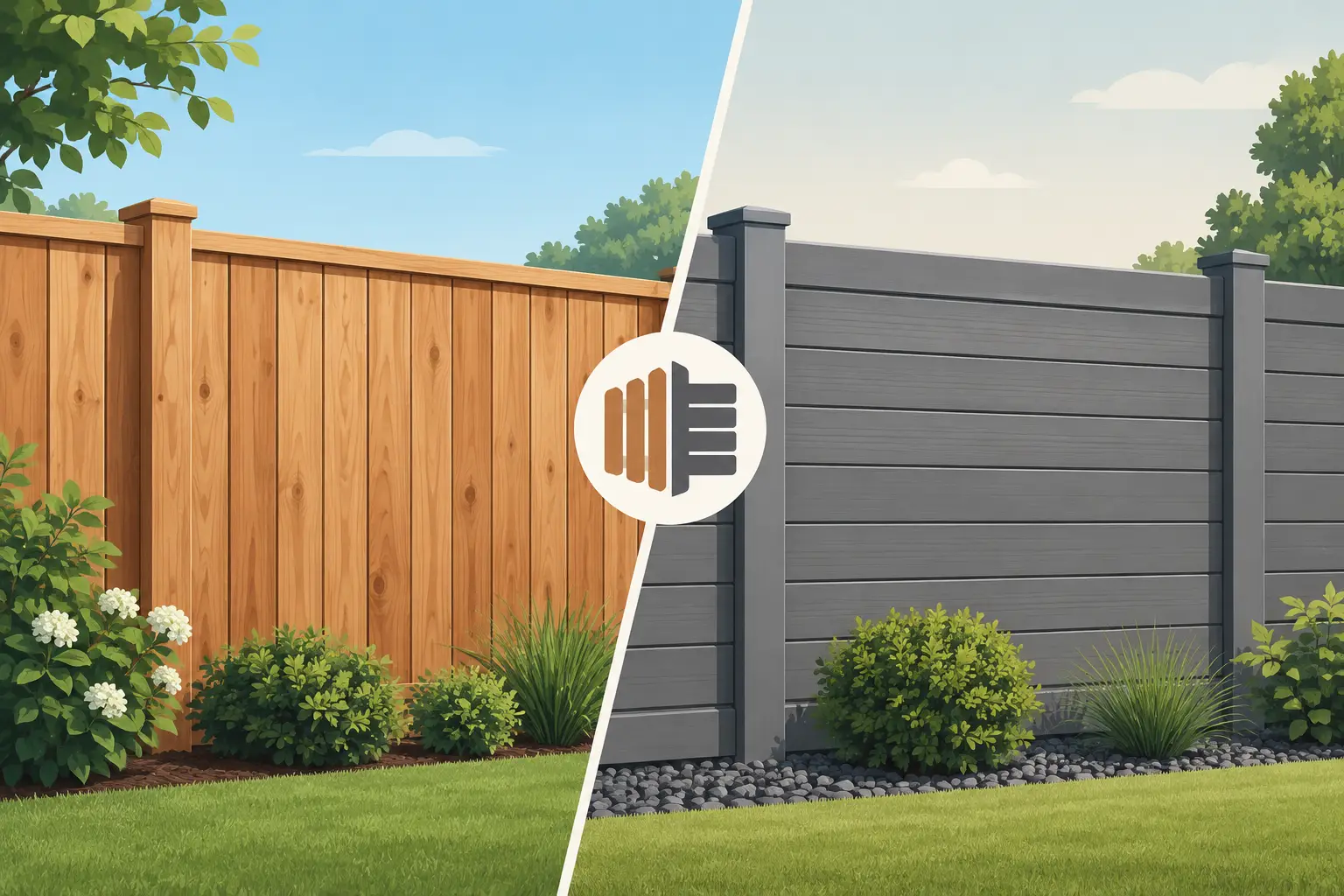
Timber Fencing vs Composite: Which Suits You?

A new fence has to do more than mark a boundary. It should give you privacy, stand up to coastal weather, suit the garden and not create a maintenance job you did not bargain for. When weighing up timber fencing vs composite, the right answer depends on your budget, the look you want and how much upkeep you are prepared to take on.
For homes, rental properties and commercial grounds across Plymouth, Devon and Cornwall, both options can work well when they are properly specified and fitted. The material matters, but so do the posts, fixings, ground conditions and the standard of installation.
Timber fencing vs composite: the main difference
Timber is the familiar choice. It has a natural finish, works with almost any type of garden and is available in many forms, from simple overlap panels to closeboard fencing, picket fencing and bespoke timber screens. It is generally cheaper to install at the outset and is straightforward to repair when a panel or rail is damaged.
Composite fencing is made from a blend of recycled wood fibres and plastic. The boards usually slot into purpose-made posts and rails, creating a clean, modern screen. It is designed to need far less routine treatment than timber, and it does not rot in the same way.
Neither is automatically better. A well-built timber fence can give decades of service with sensible care. A composite fence can save time over the years, but it comes with a higher initial cost and needs a strong, accurate installation to look right and perform properly.
Timber fencing: natural, flexible and cost-effective
Timber remains popular for good reason. It looks at home in established gardens, around stone walls and beside traditional Plymouth properties. It can also be painted, stained or left to weather naturally, giving you more control over the finished appearance.
The upfront cost is usually lower
For many property owners, timber is the practical choice when a long run of fencing needs replacing. Standard panels and closeboard systems are widely available, and there are options to suit different budgets. If a single panel is damaged by high winds or a football, replacing that section is normally simple and affordable.
The final price still depends on access, fence height, old fence removal, post choice and whether the ground is level. A short boundary with awkward access can cost more per metre than a straightforward long run.
It needs regular care
Pressure-treated timber is built to resist rot and insect attack, but it is not maintenance-free. Over time, rain, frost and strong sun can cause timber to fade, swell, shrink or develop surface splits. These changes are normal, although neglected timber will deteriorate more quickly.
Cleaning off algae and dirt, checking loose fixings and applying a suitable treatment when needed will help prolong its life. In exposed gardens, particularly those that catch south-westerly winds, a regular inspection after storms is sensible.
Quality makes a real difference
Not all timber fencing is equal. Thin, lightweight panels can be a false economy where privacy and wind resistance matter. Closeboard fencing, using individual vertical boards fixed to horizontal rails, is often a stronger choice for exposed boundaries. Concrete or good-quality timber posts can also make a major difference to the lifespan of the fence.
Composite fencing: low-maintenance and modern
Composite fencing appeals to homeowners who want a tidy, contemporary finish without planning to paint or stain it every few years. It is available in a range of neutral colours and wood-effect finishes, which can work especially well alongside patios, porcelain paving, artificial turf and modern garden features.
Less routine maintenance
Composite boards will not rot, warp or splinter like timber. They do not need annual preservative treatment, and most marks can be removed with a wash down using water and a mild cleaner. This is useful for landlords, busy households and commercial sites where time spent on regular garden maintenance needs to be kept down.
That does not mean composite never needs attention. Dust, algae and traffic pollution can still build up, especially on shaded boundaries. A periodic clean will keep the fence looking its best.
Higher initial investment
Composite systems typically cost more than standard timber fencing. The boards, matching posts, rails, caps and fixings are all part of a specific system, and the installation needs to be set out carefully. If the garden is uneven or the run includes several changes in direction, labour and materials can increase further.
The extra spend may make sense if you expect to stay in the property for years and value lower upkeep. It may be less attractive if you need a simple, good-looking boundary on a tighter budget.
Appearance and weather considerations
Composite gives a consistent finish from one end of the boundary to the other. Unlike timber, it will not develop knots, natural grain variation or the same weathered character. Some people see that as a benefit; others prefer the warmth and individuality of real wood.
Composite can also expand and contract slightly as temperatures change. This is normal, but boards need the correct gaps and fixings. Poor installation can lead to movement, uneven lines or rattling panels. A composite fence should never be treated as a quick fit job.
Cost over time: look beyond the first quote
The clearest difference in timber fencing vs composite is often the initial price. Timber usually wins on upfront cost. Composite often wins on reduced treatment and replacement needs over a longer period.
However, the comparison is not only about materials. A cheap fence fitted with shallow posts, weak rails or unsuitable fixings can fail early whatever it is made from. Equally, an expensive composite system can look poor if posts are not plumb or the levels have not been planned properly.
When comparing quotes, check what is included. Ask about removal and disposal of the old fence, post depth, post material, fence height, gravel boards, gates, finishing trims and access restrictions. This gives you a fairer picture than comparing a single headline figure.
For rental properties, timber may be the sensible option where straightforward repairs and controlled upfront costs matter most. For a long-term home improvement, composite may be worth considering if a low-maintenance finish is a priority.
What works best in Plymouth and coastal areas?
Plymouth gardens can face heavy rain, salt-laden air, damp conditions and strong winds. Properties nearer the coast, on open ground or at the top of a slope need fencing that is designed for the exposure rather than simply chosen for its appearance.
Timber can perform very well here, provided it is pressure treated, well maintained and installed with suitable posts and foundations. Closeboard fencing is often a sensible option where wind loading is a concern, as it can be built as a strong continuous structure.
Composite can also be a good choice, particularly for sheltered gardens where a clean modern look is wanted. But solid composite boards catch the wind, so the posts and footings need to be capable of handling that pressure. The same applies to tall gates and long uninterrupted runs.
Drainage should not be overlooked. Fence posts sitting in constantly wet ground are more likely to suffer, and standing water around any boundary can create problems. Good preparation below ground is every bit as important as the boards you see above it.
Choosing the right fence for your property
Choose timber if you want a natural appearance, flexibility on style, easier repairs and a lower starting cost. It is also the better fit for many traditional gardens and properties where a softer, less uniform finish is preferred.
Choose composite if you want a modern screen, consistent colour and minimal ongoing treatment. It can be a strong long-term option for homeowners who would rather spend their weekends using the garden than maintaining the fence.
Think about what sits around the fence as well. A weathered timber fence may complement mature planting, lawns and natural stone. Composite can tie in neatly with contemporary patios, rendered walls and clean-lined landscaping. If the boundary is shared, it is also worth discussing the plan with your neighbour before work starts.
Fence height and position may be subject to planning rules, particularly near a highway or around listed properties. Checking this before materials are ordered can avoid an expensive alteration later.
At R4 Services Plymouth, we look at the full job - the condition of the existing boundary, access, ground levels, exposure and the finish you want - rather than fitting the same solution everywhere. A fence is only as reliable as the groundwork beneath it.
The best choice is the one that suits your property for the years ahead. Spend time on the specification, not just the style, and you will end up with a boundary that looks right and does its job through every season.
Comments